

The Cross, the Beast, and the Temptation of Power
Why Jesus redefines power - and why that still offends us today

There’s a reason conversations about politics, power, and Christian identity feel so loaded right now. We are living in a moment where many believers have unknowingly merged the gospel with cultural narratives of winning, taking back ground, and “saving the nation” through political force or cultural dominance.
But Scripture gives us a radically different story—a story where power is not seized but surrendered, not enforced but embodied, not wielded but crucified. And that’s the place where the Christian worldview diverges most sharply from the worldview of our age.
The Bible’s Long Story of Power
From Genesis to Revelation, the question is never whether humans will use power. It’s what kind of power we will use.
Human kingdoms run on:
domination,
coercion,
violence,
and self-preservation.
But the Kingdom of God runs on:
humility,
sacrificial love,
self-giving,
and cruciform power (power expressed through weakness)
Jesus puts this contrast in front of His disciples again and again:
“The rulers of the Gentiles lord it over them…Not so with you.” (Matthew 20:25–26)
In other words: You cannot follow Jesus and chase the world’s form of power at the same time.
Jesus Doesn’t Take Power — He Redefines It
I recently finished teaching a Christian Worldview class at City Church where we emphasized a key contrast in the kingdom of God versus the kingdom of this world:
The way of the world says: “Win.”
The way of Jesus says: “Die—and in dying, you live.”
Every time Jesus is offered worldly power, He refuses it:
Satan offers Him the kingdoms of the world.
The crowds want to make Him king.
Peter rebukes Him for talking about the cross.
Pilate gives Him an out if He’ll defend Himself.
And every time the message is the same:
Jesus does not come to take power from Caesar.
He comes to expose Caesar’s power as a fraud.
His throne is a cross. His coronation is a crown of thorns. His victory march is a walk to Golgotha.
This is why the early Church was so powerful - and dangerous: They proclaimed Jesus, not Caesar as Lord. Not because He overpowered the empire, but because He out-loved it, outlasted it, and out-kingdomed it.
Revelation: The Beast vs. the Lamb
No matter what you might hear, the book of Revelation is not primarily about predicting world events—it is about unmasking the true nature of power.
It gives us two archetypes:
1. The Beast
The Beast represents all systems of power that demand allegiance through:
fear
coercion
nationalism
military might
economic exploitation
violent certainty
The Beast says: “The strong survive. The winners determine truth. Victory is all that matters.” This is the worldview many Christians have absorbed without noticing. It baptizes political power in religious language and calls it “faithfulness.” Revelation calls it the way of the Beast.
2. The Lamb
Then there is the Lamb—slaughtered yet standing. The Lamb wins not by killing His enemies, but by being killed and forgiving them. The Lamb’s power is not the ability to dominate but the ability to self-empty. It is the power of truth, love, endurance, holiness, and sacrificial obedience.
Revelation’s central claim is shocking: The Lamb conquers. The Beast imitates.
Which means:
The world’s way of power is a counterfeit.
Violence is weakness disguised as strength.
Domination is insecurity masked as authority.
Fear-based politics are a sign not of faithfulness but of idolatry.
The cross, not the sword, is the measure of true authority.
This is why Revelation is not just anti-empire. It is anti-every form of power not shaped by the Lamb.
Why This Is So Hard for Us Today
In our current cultural moment, many Christians have adopted a political gospel or a culture-war gospel:
“If we lose power, we lose everything.”
“If our side doesn’t win, the church loses.”
“Ends justify the means if the cause is right.”
But Jesus rejects this at every turn: “Get behind me, Satan. You do not have in mind the concerns of God, but merely human concerns.” (Matt. 16:23) Our problem is not that we are too political. Our problem is that we have let politics disciple us more than Jesus.
We have come to believe:
fear is wisdom,
outrage is courage,
political dominance is faithfulness,
and winning is salvation.
Revelation calls this what it is: The way of the Beast wearing a Christian costume.
The Way of the Lamb Is the Way Forward
The Christian worldview offers a clear alternative—a cruciform way of power:
Power expressed through weakness
Authority expressed through humility
Influence expressed through love
Courage expressed through non-retaliation
Witness expressed through suffering
Or as we described in our Christian worldview class: “We are not first called to legislate the Kingdom of God but to embody it.”
When the church chases power the way the world chases power, we lose our witness. But when the church embodies the Lamb— self-giving love, cruciform humility, enemy-love, and sacrificial presence— we become a prophetic minority who refuses to be discipled by the empire.
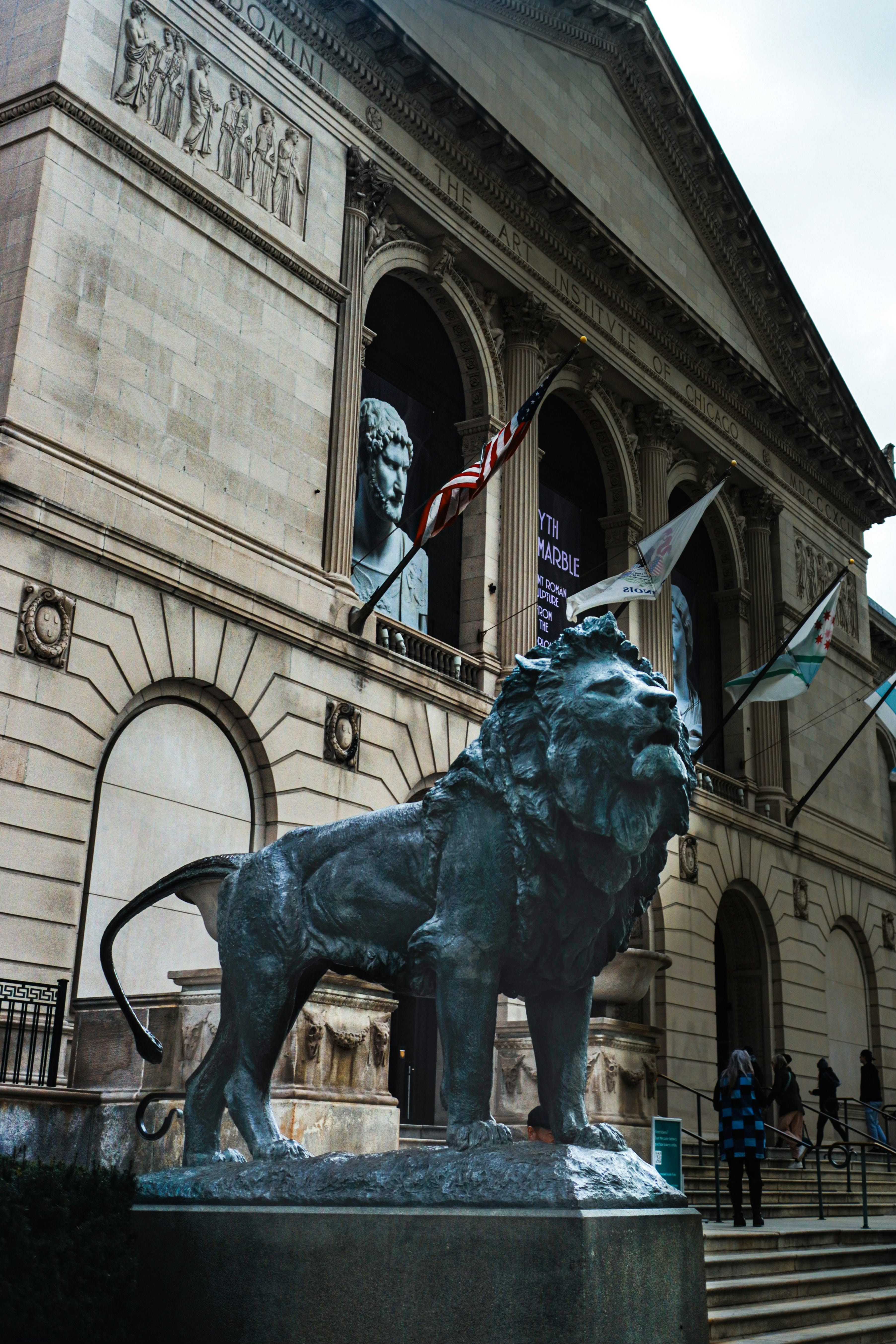
In Revelation 5:5, Jesus is described as a Lion. But in a dramatic reversal, when John turns to see the Lion in Revelation 5:6, what he sees is a Lamb. The Lion is announced but the Lamb is revealed.
Here is the part that still offends many Christians today: Jesus conquers as a Lion by becoming the Lamb. Or in other words, the power of Christ is in His sacrifice, not His domination.